FRONTINUS

Methodology

How FRONTINUS is built

Six staged operations from the reaction zone to a sealed paste tote. Images are generated working drawings of the method, not photographs of a constructed field.

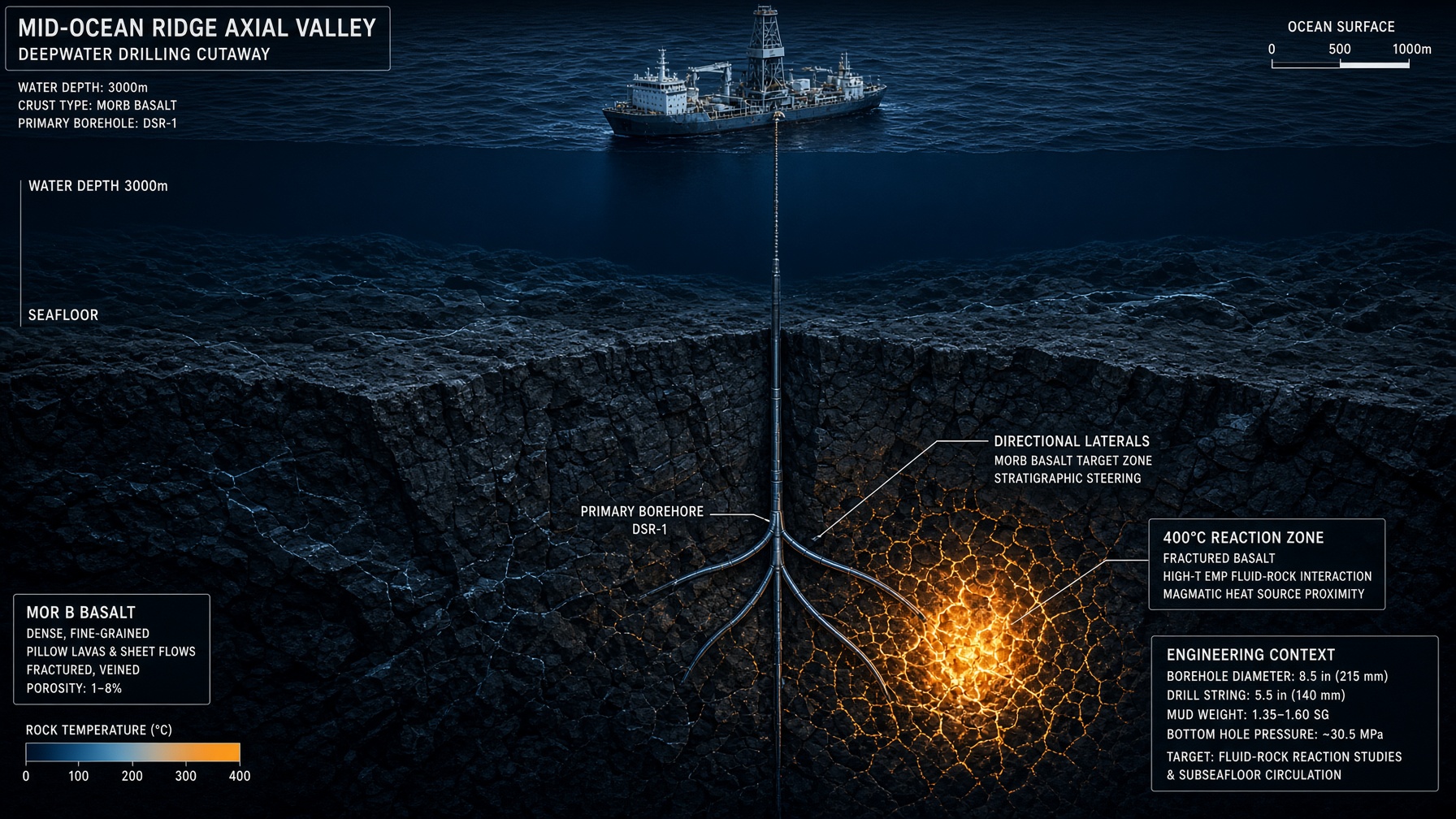
Directional laterals into the MORB reaction zone
01 — Directional laterals into the MORB reaction zone

01

Directional laterals into the MORB reaction zone

A primary borehole is kicked off from the MAR axial valley. Rotary-steerable laterals (typically 3–10 branches, 500–2,000 m each) intersect the 350–425 °C reaction zone in fractured MORB. Ocean hydrostatic head keeps the system fully saturated, so flow is continuous rather than geyser-cyclic.
Titanium high-temperature drill stem
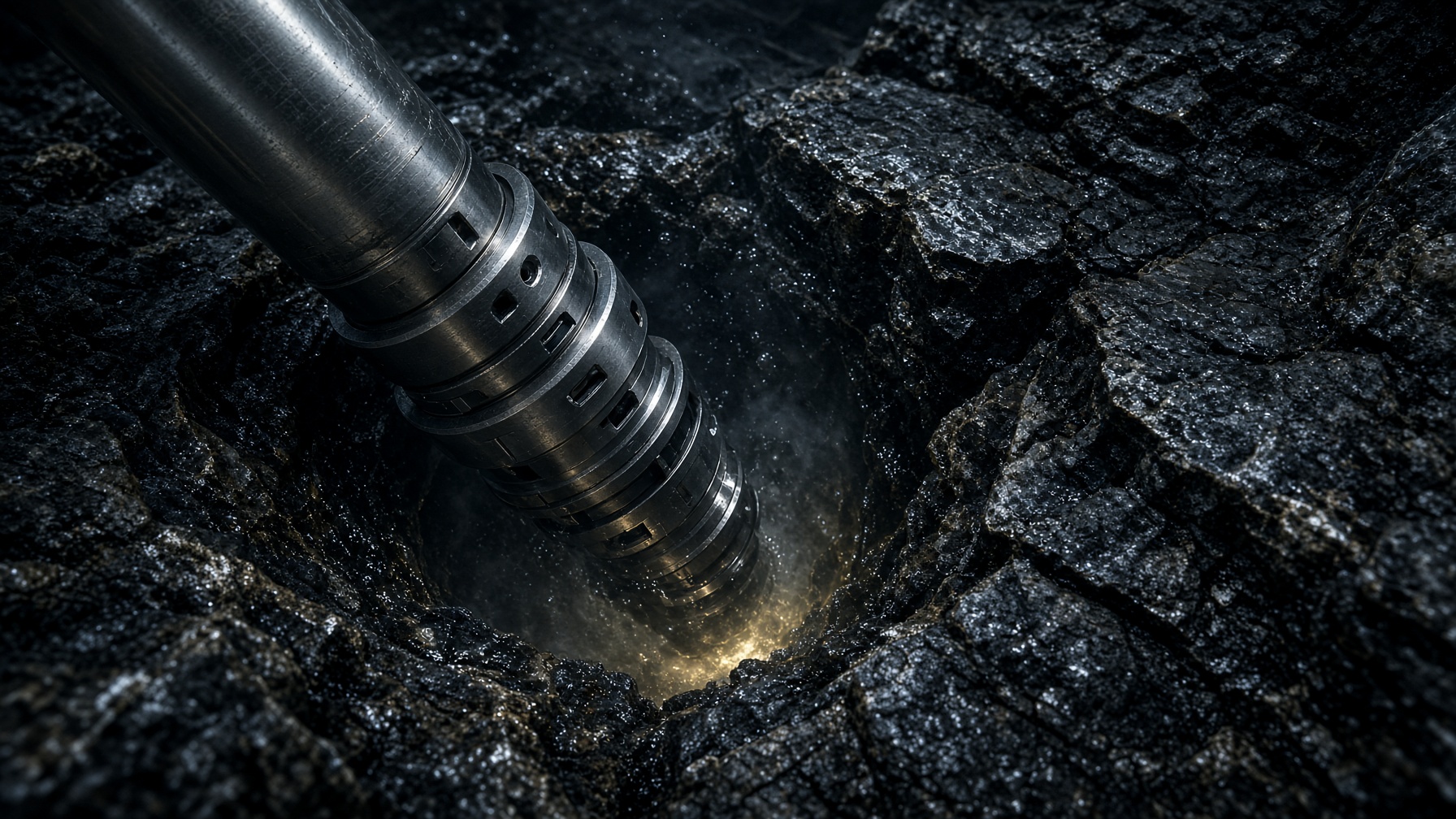
02 — Titanium high-temperature drill stem

02

Titanium high-temperature drill stem

Standard steel fails in hot, acidic, H₂S-bearing brine. Grade-29-class titanium tubulars (and geothermal rotary-steerable tools rated 300–400 °C) carry the laterals. Completions stay open or lightly perforated in the hot zone so seawater can recharge and metal-rich fluid can rise.

Neutrally buoyant 3D-printed concrete column
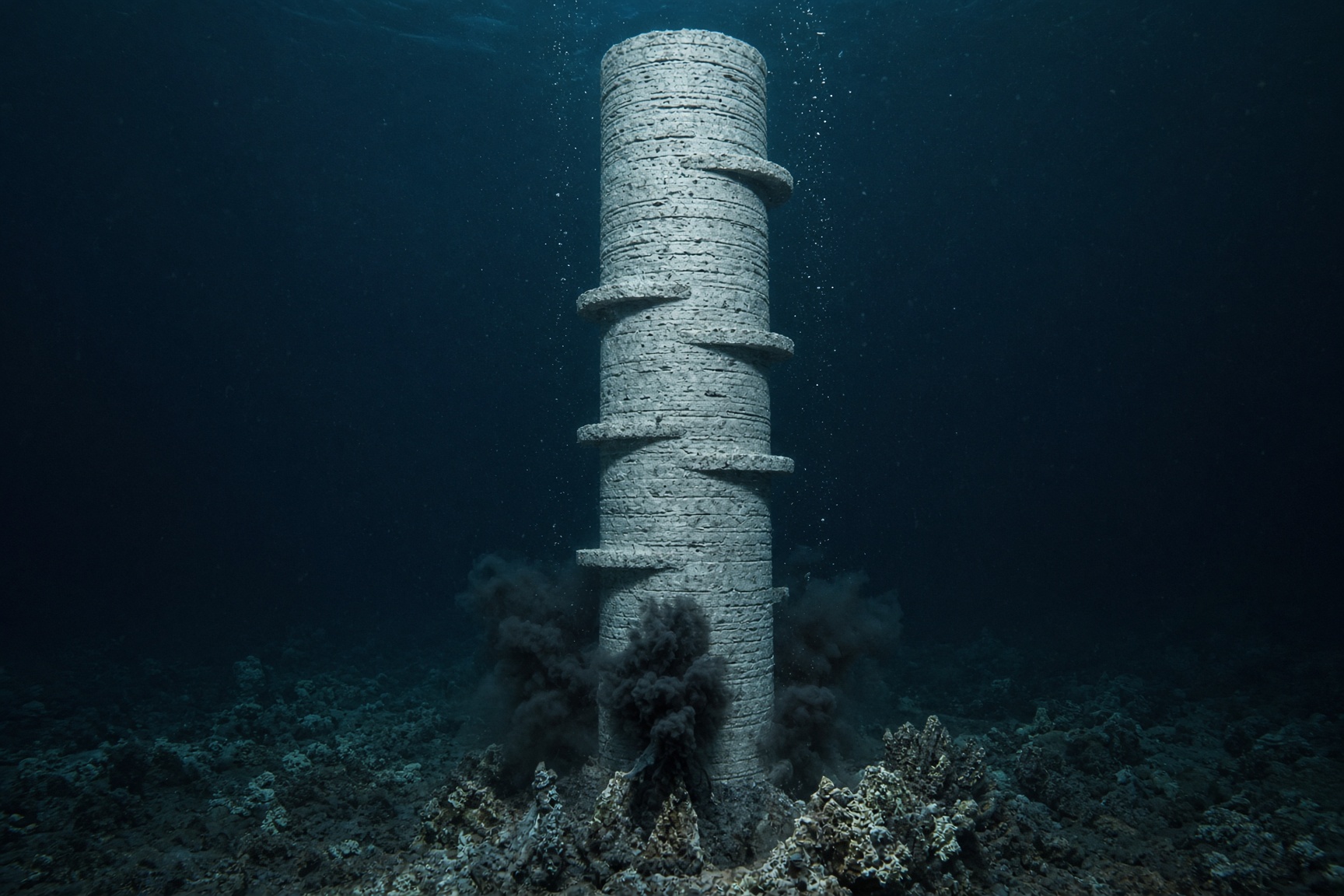
03 — Neutrally buoyant 3D-printed concrete column

03

Neutrally buoyant 3D-printed concrete column

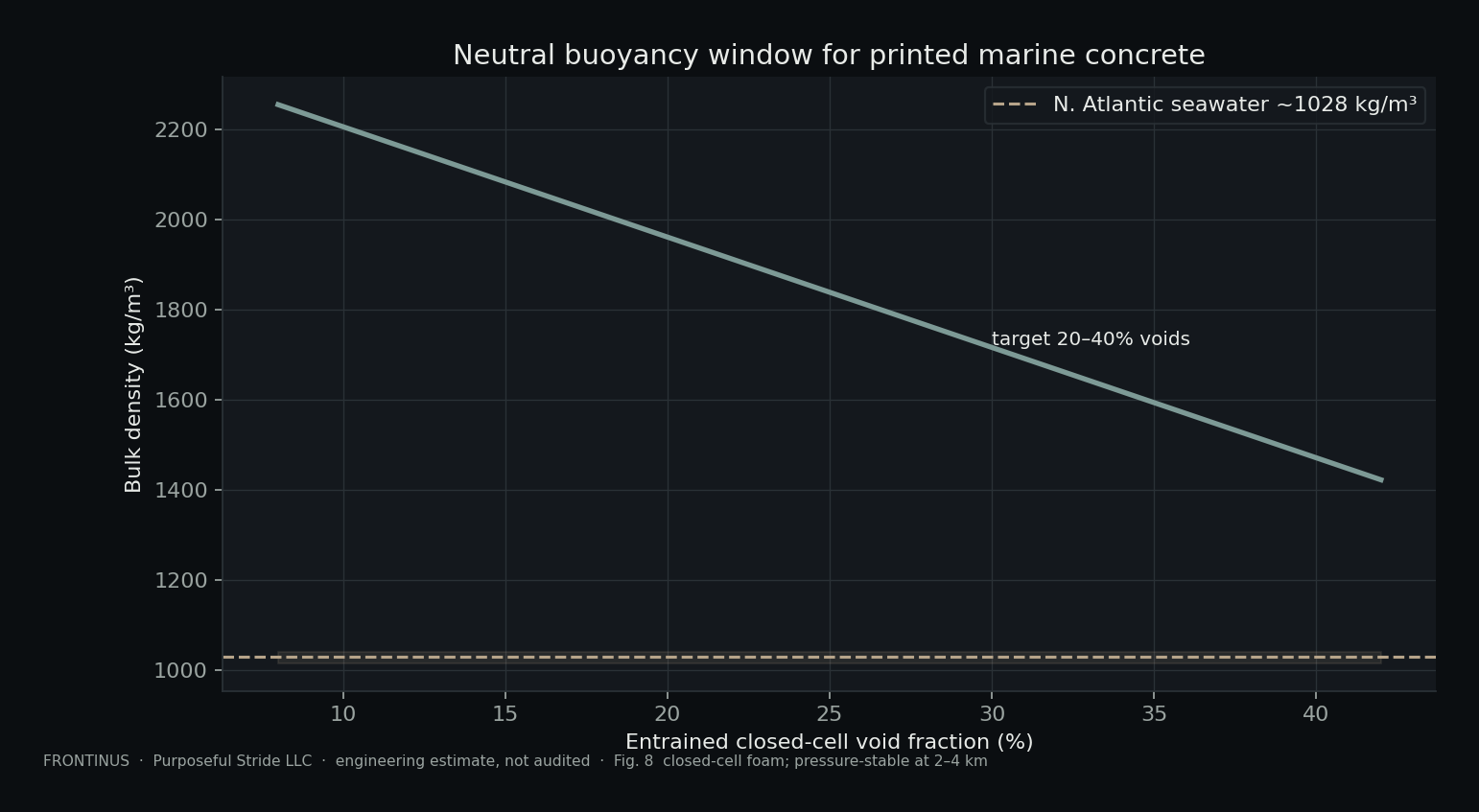
A 20–50 m vertical harvest tower is printed from marine concrete with 20–40% closed-cell voids so bulk density matches North Atlantic seawater (~1,025–1,030 kg/m³). The tower sits over the engineered orifice with minimal anchoring and houses the distillation internals.

Zoned collector plates
04 — Zoned collector plates

04

Zoned collector plates

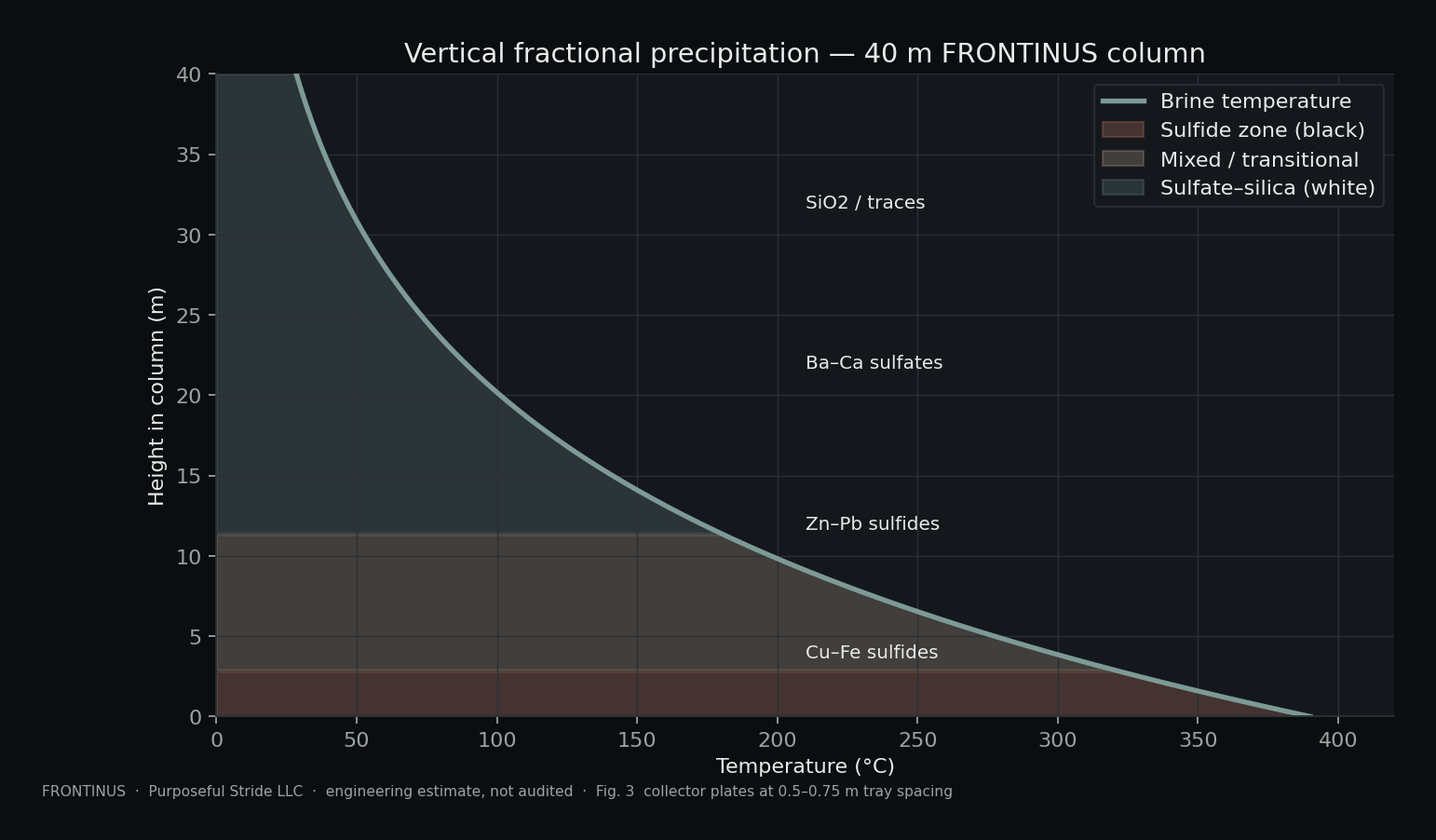
Chimney trays at 0.5–0.75 m spacing create discrete supersaturation stations. High-T Fe–Cu–Zn sulfides drop first (black-smoker mud). Cooler sulfate–silica phases drop higher (white-smoker mud). Trace Au, Ag, Co and selected REEs concentrate in specific layers rather than mixing into gangue.

Closed-cell foamed concrete
05 — Closed-cell foamed concrete

05

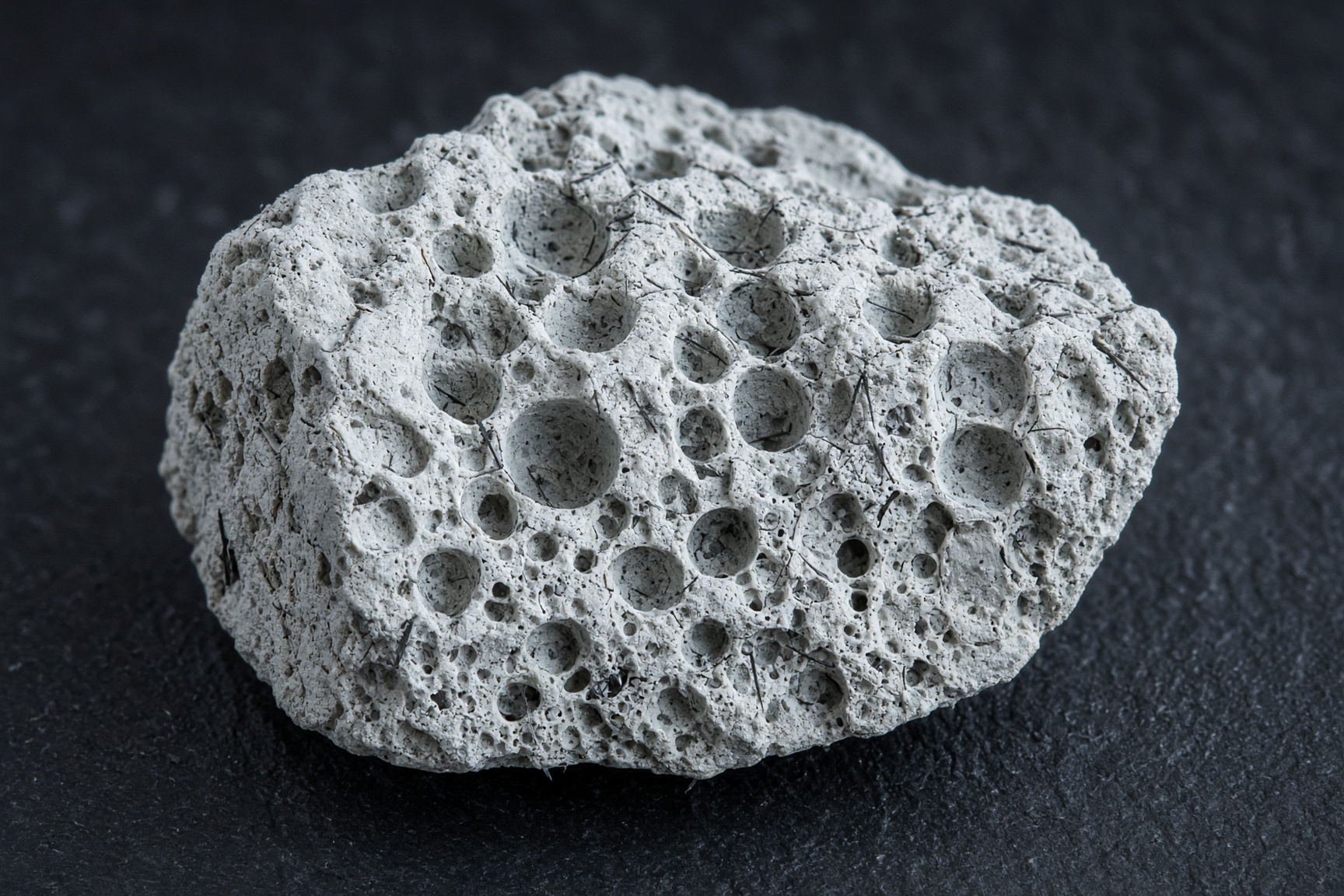
Closed-cell foamed concrete

Entrained voids are designed as closed cells so hydrostatic crush at 2–4 km does not flood the foam. Basalt or glass fiber keeps printed layers from cracking. Density is tuned in the mix, not with external buoys.

Riser, dewatering, paste
06 — Riser, dewatering, paste

06

Riser, dewatering, paste

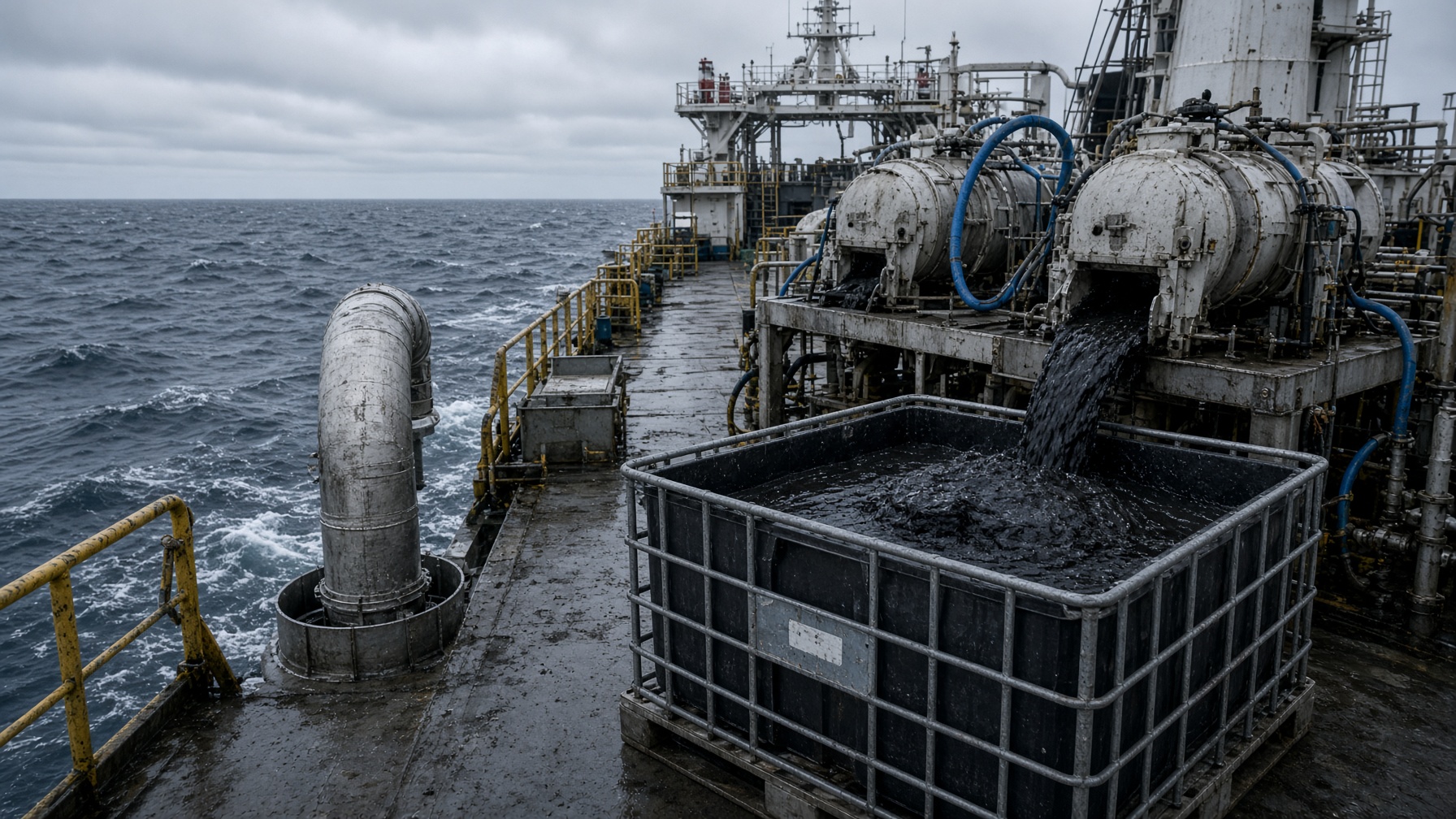
Zone-specific slurries (10–30% solids) rise in an insulated riser. Surface centrifuges and thickeners produce a 60–80% solids paste for sealed totes and conventional concentrate shipping. No bulk chimney demolition is required for the first product stream.

Matplotlib plot of concrete density versus void fraction
Fig. 8 — Matplotlib. Neutral-buoyancy window for printed marine concrete.
Matplotlib precipitation zones
Fig. 3 — Matplotlib. Collector-plate stations follow the cooling curve.